TRADITIONAL AUTHORITY OR POLITICAL PAWNS? ZIMBABWE’S CONTROVERSIAL BONUSES POST-ELECTION
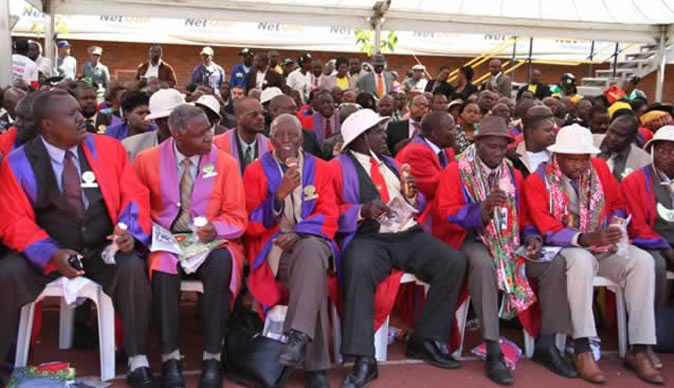
In a development that has sparked widespread debate both within Zimbabwe and internationally, President Emmerson Mnangagwa’s government has recently approved a series of bonuses for the nation’s traditional leaders. This move comes on the heels of a highly contested 2023 election victory for Mnangagwa, an event not without its share of controversy and allegations of electoral misconduct.
The structure of these bonuses, based on a sliding scale, is perceived by many as a form of recompense for the significant role these chiefs played in securing Mnangagwa’s electoral triumph. Their involvement was not limited to passive observation; they were, in fact, active participants in the campaign, closely aligning with President Mnangagwa and Zanu PF’s enigmatic faction, Faz, especially in rural locales.
This act of rewarding traditional leaders financially after the election is not a novel phenomenon in the Zimbabwean political landscape. It serves as a stark reminder of the longstanding entanglement of traditional authority with political power in the country. However, the timing and essence of these bonuses have ignited intense discussions and critical backlash. Opponents argue that this gesture blurs the historical line separating traditional stewardship from political bias, potentially jeopardizing the chiefs’ roles as impartial guardians of cultural and societal norms.
Adding complexity and intrigue is the involvement of Zanu PF’s elusive Faz group in rural campaigning alongside these traditional figures. The operations and intents of Faz have long been veiled in secrecy, casting doubts over the transparency and integrity of the electioneering process.
The context of the 2023 election further amplifies the significance of this development. Plagued by claims of irregularities and unfair tactics, the election’s legitimacy was already under scrutiny. The subsequent rewarding of key figures instrumental in securing Mnangagwa’s victory only heightens suspicions of electoral manipulation and undue influence.
These bonuses represent more than a simple gesture of political gratitude. They signal an alarming trend where the revered institution of traditional authority, ideally non-partisan and autonomous, is increasingly being ensnared in the political web. This shift risks diminishing the esteem and confidence traditionally placed in these leaders by their communities.
Additionally, this action raises pressing concerns about the allocation of state resources. In a nation battling a myriad of economic and social challenges, the decision to allocate funds for bonuses in the wake of a disputed election has been met with substantial criticism. Many contend that such resources could be more effectively utilized to alleviate the numerous challenges confronting the Zimbabwean populace.
This government decision has also ignited a wider debate on the role of traditional leaders in contemporary African politics. While their contribution to cultural preservation and societal harmony is undeniable, their growing engagement in partisan politics remains a divisive and contentious issue. The situation in Zimbabwe exemplifies the intricate balancing act between upholding traditional authority and preventing its exploitation for political gain.
In summary, the sanctioning of bonuses for traditional leaders following the 2023 election is a decision with profound implications for Zimbabwe’s political fabric. It raises critical questions about the confluence of tradition and politics, the impartiality of traditional authorities, and the utilization of state resources for political patronage. As Zimbabwe navigates these complex dynamics, the global community watches keenly, anticipating how these developments will influence the country’s future trajectory.


These chiefs are sellouts being used by ZANU PF to oppress the people of Zimbabwe. They are not meant to be partisan but during the last election, chiefs went around summoning people to vote for ZANU PF and threatening people that if you vote for CCC, they will know it and you will suffer the sequences.
They got away with it but enough is enough, people should be returned to the people.
ZANU PF has captured all the important voices who used to stand with the people in times like these – chiefs, religious leaders and business people and now the masses are on their own. It will only take the masses to liberate itself because all other means have failed.